
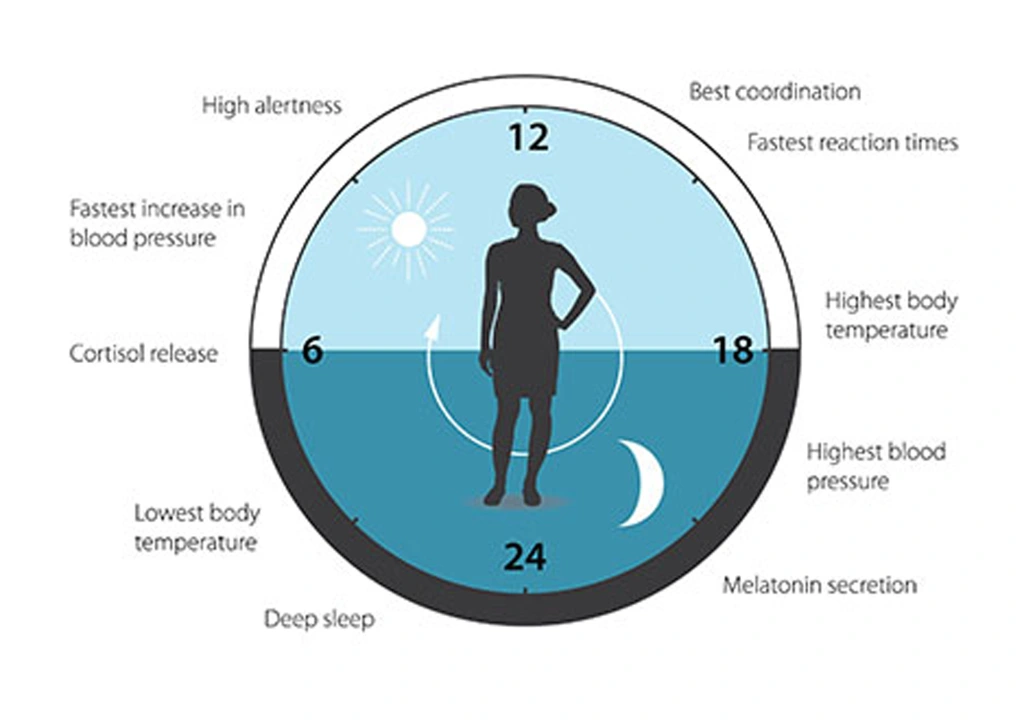
How Biological Clocks Shape Our Daily Rhythm
People truly differ in how easily they fall asleep and wake up, and this is not only a matter of habits. Research has shown that each person has an innate chronotype, meaning a tendency to be a night owl, a morning lark, or somewhere in between. This rhythm is influenced by a specific combination of genes related to the body’s biological clock, although there is no single gene that makes someone a night owl. Genetics determines roughly half of our sleep timing preferences.
There are also age related changes. Up to the age of twenty, most people gradually shift toward a later schedule. Teenagers genuinely find it easier to live according to a later rhythm. After twenty, the tendency reverses and the body begins to favor earlier wake ups. Between these two extremes is the chronotype often called doves, people who feel equally comfortable in the morning and in the evening.
The remaining nearly half of influencing factors are connected to the environment. Work schedules, school routines, and social structure can easily adjust us to a required timetable, even if it contradicts our biological preferences. This is why a person who claims they cannot wake up early because of genetics may suddenly adapt when a strict manager or shift work appears.
Social rhythm and daily structure turn out to be almost as important for internal clocks as natural light. That is why sleep therapy places great emphasis on adjusting habits. A stable wake up time, calm preparation for sleep, and proper organization of the day improve sleep quality. When a routine becomes regular, the biological rhythm stabilizes, and sleep becomes deeper and more predictable.