
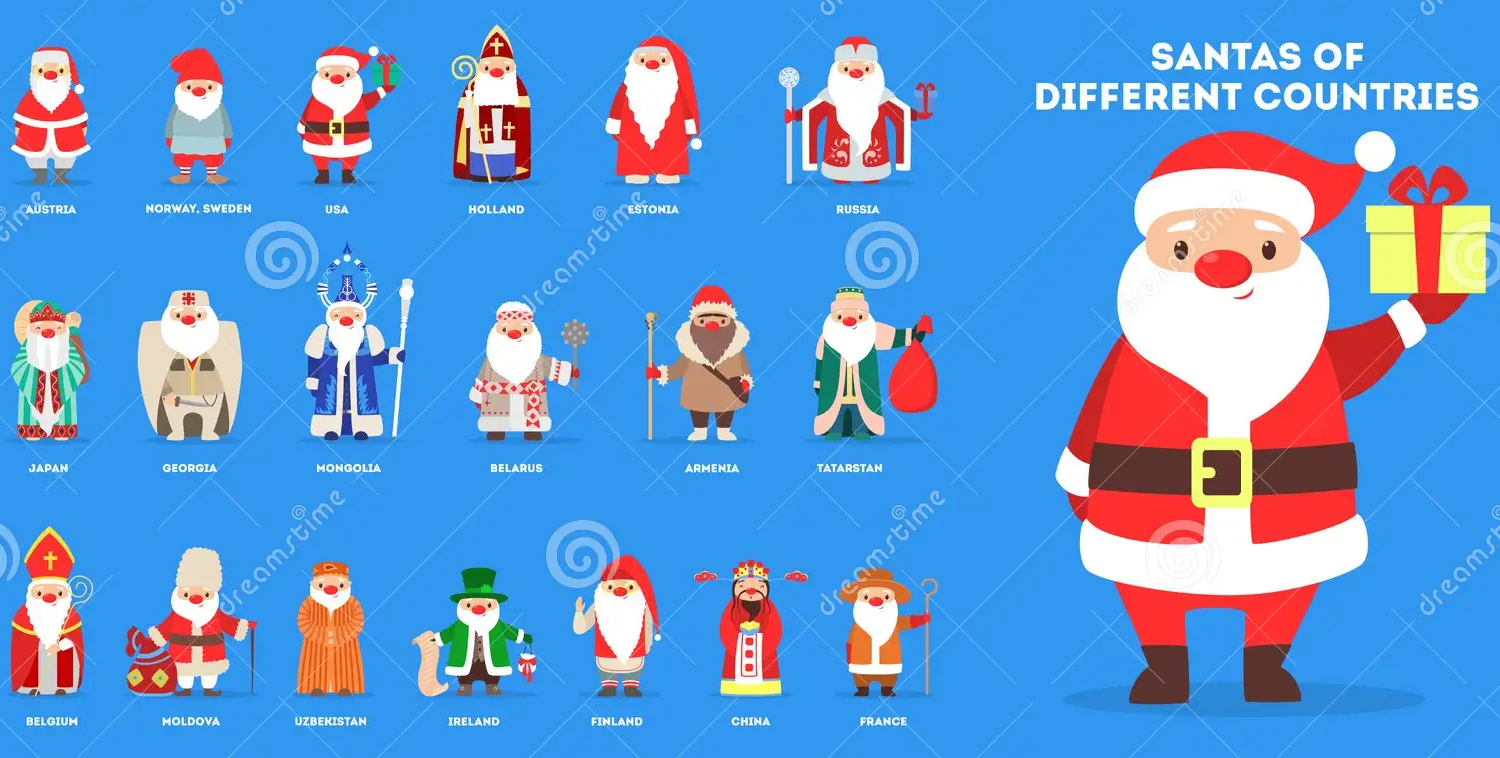
The Image of Santa Claus in Different Countries
The image of Santa Claus has changed much more across countries than it may seem at first glance. Today we are used to a cheerful elderly man in a red coat, but a hundred years ago things looked very different. Each culture imagined its winter gift giver in its own way. The history of these characters shows how strongly marketing and mass culture can transform traditions. This is especially noticeable in the case of a popular soft drink that reinterpreted Santa Claus in the nineteen thirties and essentially shaped his modern appearance.
In Great Britain there once existed the old figure of Father Christmas. He was more a symbol of festive feasting than of children’s gifts. He was depicted in long robes, with a wreath of holly, and sometimes even riding a goat. Only in the nineteenth century did this character begin to resemble the familiar image, gaining a white beard, a cloak, a staff, and a kinder personality.
In the Netherlands, almost nothing has changed. The local Sinterklaas still looks like a bishop wearing a mitre and a red mantle. He arrives to see children on a white horse and leaves gifts in shoes by the window. Advertising campaigns did not influence his image. Here, old traditions have been carefully preserved.
In the United States, Santa Claus appeared thanks to Dutch settlers, but the familiar image was created by the artist Thomas Nast in the nineteenth century. He invented a plump, bearded old man who lives in the far north, keeps a list of good and bad deeds, and delivers gifts through the chimney. Later, advertising fixed this appearance worldwide.
In France, Père Noël long remained similar to a wandering old man in a long cloak, leaving gifts in children’s shoes. But in the twentieth century, under the influence of mass culture, the French Christmas figure gradually adopted the features of the American Santa Claus. He gained a red suit, a white beard, and the familiar festive silhouette.
In Finland, the story turned out to be especially unusual. The local Joulupukki was once not a kind grandfather at all, but a Yule goat that went from house to house demanding treats. Over time, this frightening spirit turned into a generous winter guest, and in the twentieth century his appearance became almost identical to Santa’s. However, some older traditions have survived. In certain regions, people still remember Nuuttipukki, a stern character who reminds them of the ancient origins of winter celebrations.