Why School Does Not Teach Communication
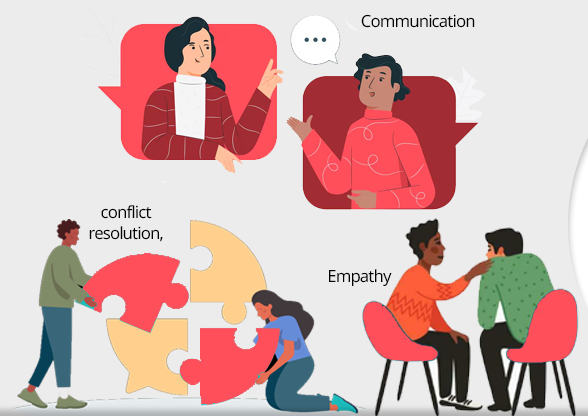
Communication and the ability to build relationships are among the reasons why parents bring their children to school, hoping that there the child will learn how to interact and work in a team. Yet, surprisingly, school hardly develops these skills. In a typical schedule there are no special classes where children can discuss real life situations, learn to negotiate, understand the feelings of others, and resolve conflicts. The curriculum is overloaded, the pace is standardized, and there is simply no room left for the development of social intelligence.
Difficulties with mastering academic material in a regular school have long been known. Parents try to adapt to this reality in different ways. Some look for a gymnasium with a well structured program, others hire tutors, and some switch to homeschooling. But even the most modern models face the same problem. Children interact very little with one another and receive almost no experience of communication, which is so important for future adult life.
Everyday school routine is organized in a way that leaves almost no space for live interaction. Breaks are too short, and everyone is busy trying to get to the cafeteria, change clothes, or gather their belongings. Children sometimes complain that during the entire day they barely manage to exchange a few words with friends. After lessons they have clubs, sports sections, and homework. Yard communities, where children used to make friends, resolve disputes, and learn to understand others, are gradually being replaced by screen based entertainment.
At the same time, children need more than formulas and rules. To grow into confident individuals, they need to understand their inner world, sense the emotions of others, learn to express themselves, defend their own boundaries, and respect those of others. Yet parents often know surprisingly little about their child’s emotional experiences. By evening, there is usually enough energy only to check homework and have a short conversation about what was for lunch, not to talk about relationships and feelings.
Some private schools are already trying to introduce communication focused classes, but in public schools this is still rare. In most cases, a school psychologist is overloaded and can deal only with urgent problems. As a result, this gap is gradually being filled by independent children’s centers, where psychologists conduct group sessions. There, children learn to talk about their emotions, try out different behavior models, discuss cartoons, reflect on personal experiences, and receive feedback in a calm and supportive atmosphere.