
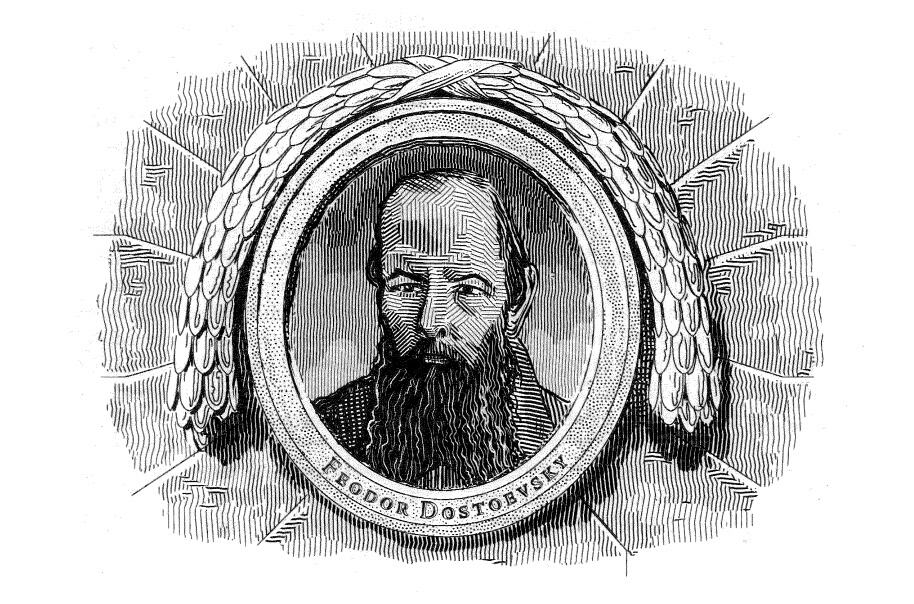
Dostoevsky and the Art of Indirect Confession
Fyodor Dostoevsky is one of those rare authors whose legacy changes not only literature but also the very understanding of the human being. He is called a prophet, a psychologist, a philosopher, yet these definitions often conceal the main point. Dostoevsky created a special way of speaking with the reader. At the core of his writing lies the form of indirect confession. This concept reflects a persistent desire to speak not directly, but through a literary text that becomes the only way to overcome loneliness and connect personal experience with the experience of humanity.
A Writer’s Diary is often perceived as his most personal statement, yet Dostoevsky himself admitted that a true diary is impossible, since any public word inevitably becomes a mask. Therefore, his confessional tone is always intertwined with fiction. This is not confession in the religious sense, but rather a form of preaching. In other words, it is an attempt to admit one’s weaknesses while at the same time revealing a certain truth to the reader.
At the same time, he constantly emphasized the impossibility of an incomplete confession. Even the slightest lie destroys it. This idea underlies the motif of the failed confession, which is especially visible in the character of Stavrogin. The hero wavers between the desire to reveal himself and the fear of being truly seen, and this inner split exposes the same problem that exists in the author himself. A person desperately seeks recognition, yet chooses not a listening interlocutor, but their own double for the conversation.
This play with duality has its roots in Dostoevsky’s unique ability to transform himself. He inhabited his characters not through acting techniques, but through deep empathy. He was able to become the Other without ceasing to be himself, and this ability created a space in his texts where personal and foreign consciousness intertwine. The reader enters this space automatically, even when Dostoevsky speaks through a character with opposite beliefs. This is how his ideas gain their power.
Laughter plays a special role in this communication. In Dostoevsky, laughter is always dual in nature. It can be a tool of destruction and at the same time a sign of genuine sympathy. It is a reaction that sometimes breaks and sometimes saves the connection between people. Such ambiguity makes it a key artistic instrument.
This approach reshaped the very principle of narration. Dostoevsky combined what seems incompatible. Confession and play, sincerity and pretense, philosophy and psychology, fantasy and realism. He sought to see the human within the human, and for this he turned storytelling into an act of communication. His texts are a form of dialogue built on mutual recognition. To understand the character, one must hear oneself within them.
Therefore, Dostoevsky’s work primarily belongs to the sphere of communication. He creates a world in which a person can see their own inner split, experience another’s pain as their own, and through this feel a sense of wholeness. This is where the secret of his extraordinary influence lies. He does not merely write about the human being, he compels the reader to enter into a conversation with them.