The History of the Vatican From an Ancient Sanctuary to a Sovereign State
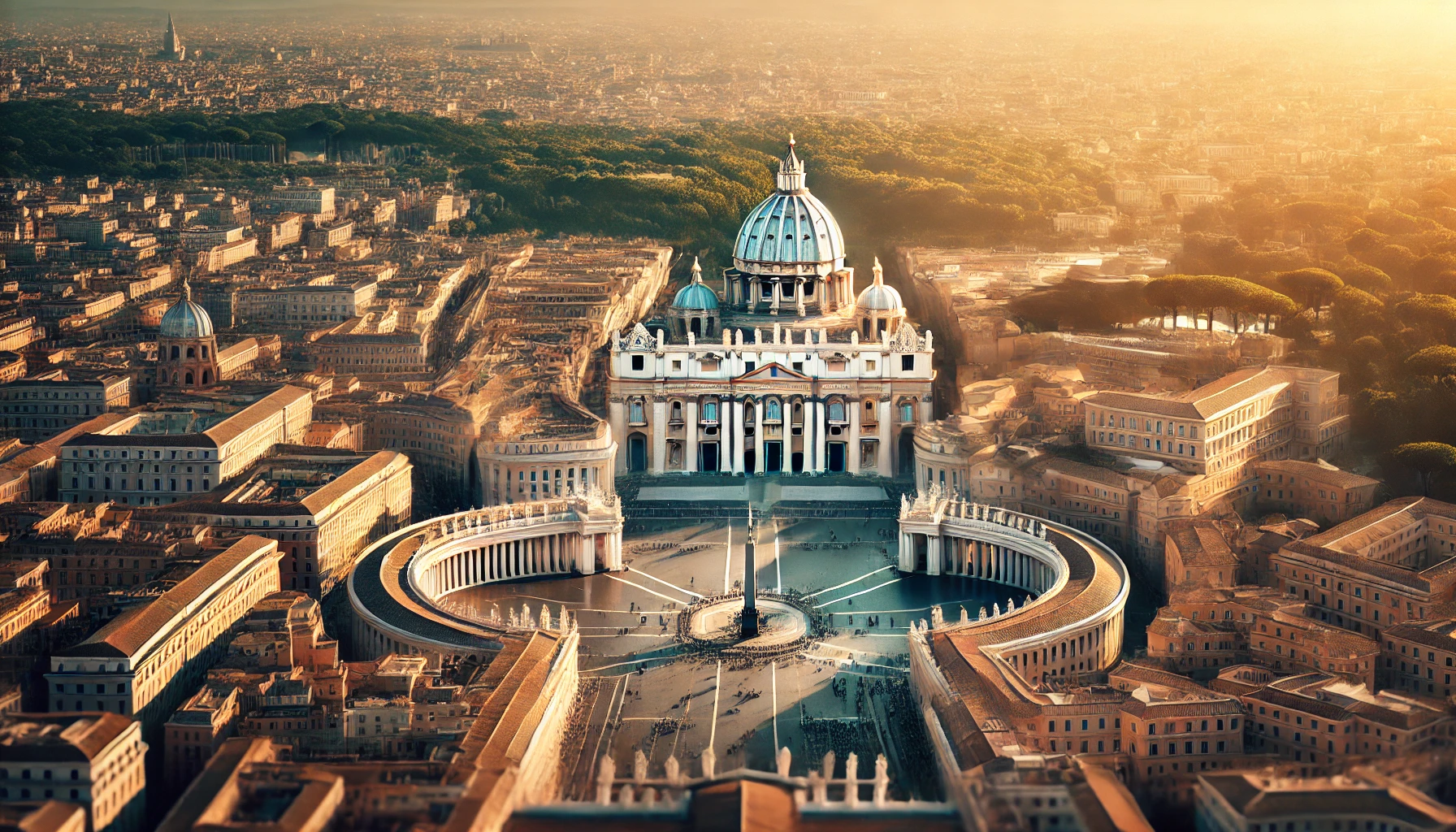
The Vatican is a tiny state covering about one hundred acres, enclosed within Rome and smaller in size even than New York’s Central Park. Despite its miniature scale, it is one of the most significant centers of Europe’s spiritual and cultural history. Today it is an absolute monarchy where the head of state is the Pope. The state became independent only in 1929, although for centuries it had served as the heart of the Catholic world.
The formation of the Vatican took place gradually. As early as the fourth century, Emperor Constantine ordered the construction of a basilica over the presumed tomb of the Apostle Peter. This marked the beginning of the religious history of the territory. Centuries later, in the eighth century, the Papal States emerged, giving the papacy real political power. Later, after a temporary relocation of the papal residence to France, the pontiff returned to Rome, and the Vatican once again became the center of Catholic life.
In the sixteenth and seventeenth centuries, the territory was transformed by grand architectural projects of the Renaissance era. These included the new Basilica of Saint Peter, the works of Bernini, and Michelangelo’s contribution to the creation of the Sistine Chapel. However, by the end of the nineteenth century, the papacy lost its secular power. Italy annexed the Papal States, and the Vatican became an isolated enclave.
Only in the twentieth century was legal independence restored. The Lateran Agreements of 1929 recognized the city state as sovereign. In the decades that followed, the Vatican became a visible actor in international politics. It lived through the Second World War, held the large scale Second Vatican Council, and the figure of John Paul the Second brought it unprecedented global attention.
In the most recent history, two events stand out in particular. The unexpected resignation of Benedict the Sixteenth in 2013, the first such case in almost six centuries, and the jubilee year 2025, when after the death of Pope Francis his successor, Cardinal Robert Prevost, was elected. Thus, despite its size, the Vatican remains a dynamic and influential state whose history is closely intertwined with the history of all of Europe.