
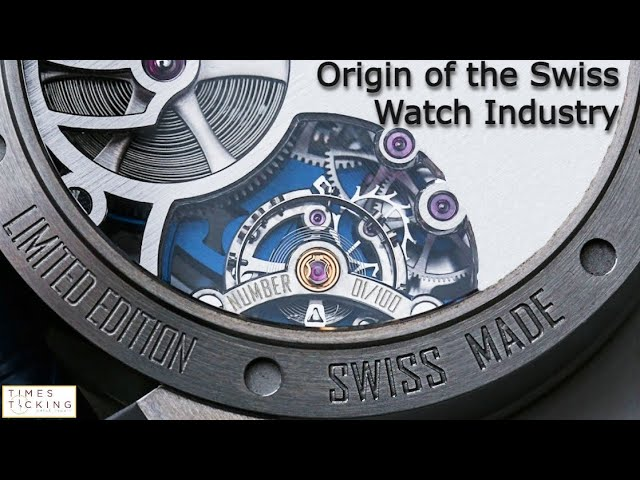
How the Legend Began The True Origins of Swiss Watchmaking
Swiss watches have long become a symbol of luxury, precision, and impeccable style. Their refined design, complex mechanisms, and use of precious materials have turned them into markers of high status. They are chosen by politicians, artists, and entrepreneurs. Yet few people consider that the origins of this legendary industry emerged far beyond the borders of Switzerland itself.
The first craftsmen who laid the foundation of Swiss watchmaking were Italian and French Catholics who fled to Switzerland in the sixteenth century out of fear of religious persecution. They hoped to find refuge in Geneva, but instead encountered the strict rules of John Calvin, who banned luxurious jewelry. As a result, watchmakers were forced to abandon decorative extravagance and focus on the technical perfection of their mechanisms. Quite unexpectedly, this became the starting point of Swiss precision.
Several decades later, the craftsmen united in the Geneva Guild of sixteen hundred one and then dispersed across small towns throughout the country, opening their own workshops. This is how the first future great brands appeared. By the seventeenth century, Switzerland had become a global center of watchmaking, and in the nineteenth century the first factory style production was established.
The age of invention completely transformed the field. Abraham Louis Perrelet created the first perpetual watches with an automatic winding mechanism that worked through the movement of the wearer’s hand. Later, Adrien Philippe introduced pendant watches and models with calendars. In the twentieth century, mass produced watches appeared, followed by automatic movements and later quartz models. The quartz revolution of the nineteen sixties and seventies nearly destroyed the industry, as Japanese watches proved cheaper and thinner. To save the sector, Swiss craftsmen developed ultra thin models and then continued to surprise the world with new innovations, from Franck Muller’s tourbillon to automatic quartz mechanisms.
Today, Swiss companies continue to produce watches that combine tradition with modern technology. These may include luxurious Fabergé models, strict Philip Watch designs, or fashionable Diesel collections. The variety of lines allows everyone to find an ideal option. And although the world has changed greatly, one thing remains the same. Swiss watches are still considered the benchmark of precision and craftsmanship.