
History of Wireless Headphones
Wireless headphones have long become a familiar part of everyday life. They are light, compact, and free of tangled cables. Although they have a clear drawback, as they are easy to lose and can disappear under a sofa or into any small gap, convenience still wins. The history of wireless headphones began much earlier than many people assume.
At the end of the nineteenth century, inventors began experimenting with transmitting sound through the air. Guglielmo Marconi’s work on wireless telegraphy became a starting point. At first, Morse code signals were transmitted, followed later by voice messages. Soon after, the first radio stations appeared, and engineers such as Reginald Fessenden learned how to transmit sound over long distances.
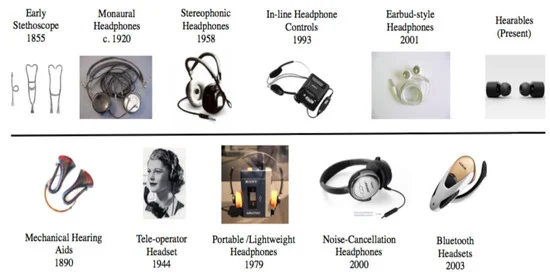
A real technological breakthrough came closer to the nineteen sixties. The company Koss created the first headphones that used radio signals. They were large, heavy, and far from ergonomic, but the very possibility of listening to music without wires was revolutionary. In the nineteen eighties, Sony proposed another method of sound transmission. The signal was sent using infrared light. These models only worked near the transmitter, but they demonstrated that the format had a future.
The designs closest to modern wireless headphones emerged in the late nineteen nineties and early two thousands. For example, Ericsson developed early models using Bluetooth technology. They were compact and suitable for outdoor use. Within just a few years, further technological advances allowed wireless headphones to confidently begin replacing wired ones in everyday life.
Modern wireless headphones are small, high tech devices. They can cancel external noise, analyze surrounding sounds, connect to voice assistants, and operate for many hours without recharging. Development continues as well. In the coming years, new ways of transmitting sound without latency are expected, along with more precise noise cancellation systems, smart sound tuning based on the environment, and possibly fully wireless charging while in motion.