The Forbidden Citypalace complex, Beijing, China
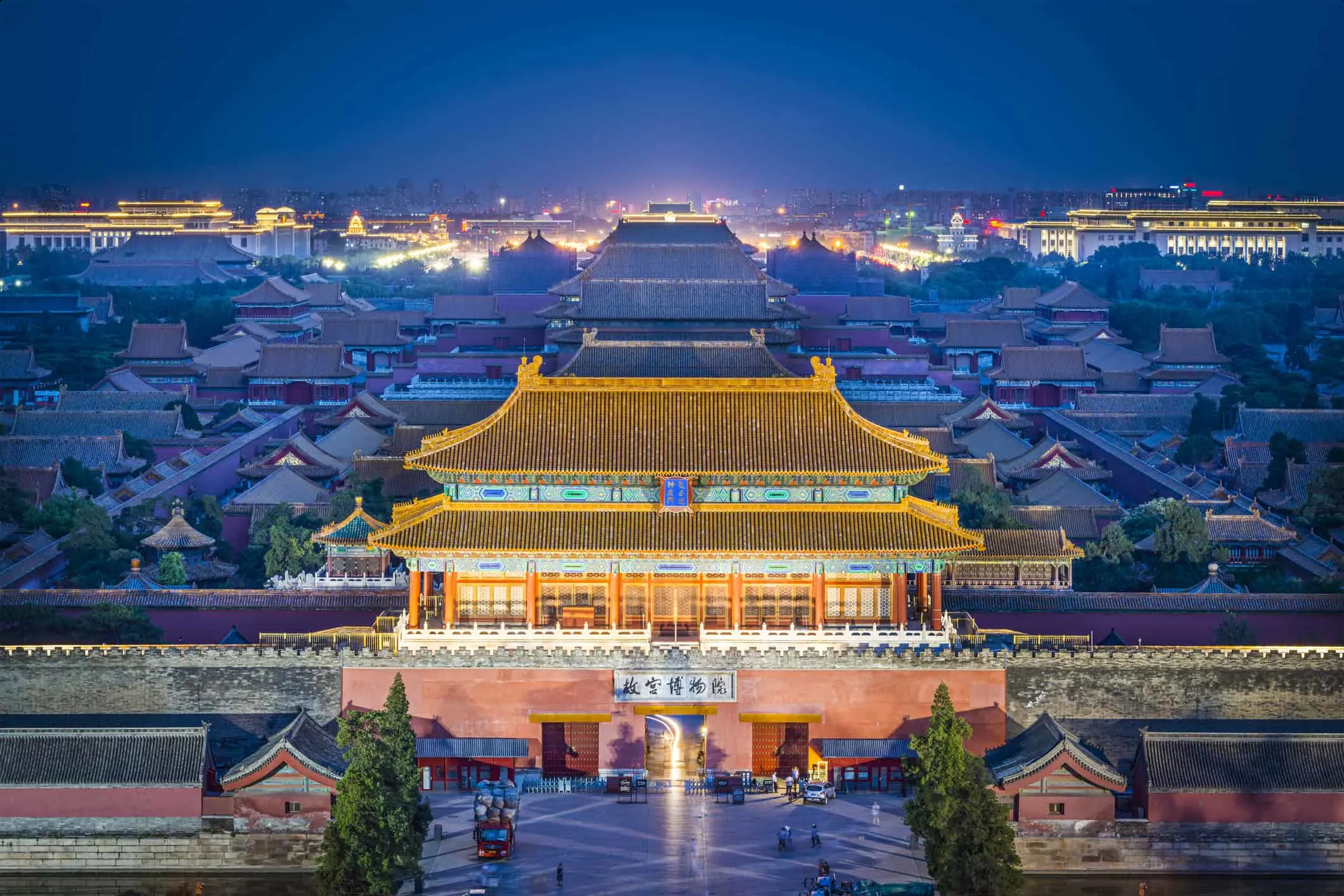
The Forbidden City, an imperial palace complex in the heart of Beijing, China. The 72-hectare complex was inscribed on the UNESCO World Heritage List in 1987 as one of the five most important palaces in the world.
Why is it called the Forbidden City?
The English name “Forbidden City” is a translation of the Chinese name 紫禁城 (ZǐJìnchéng), “Purple Forbidden City”. In ancient times, the emperor was considered as the son of Heaven, and had the great authority of Heaven. His divine residence was certainly forbidden to ordinary people, which is why the Forbidden City got such a name. Now in China it is usually called the “Former Palace” (故宫 GùgōNg).
Architecture
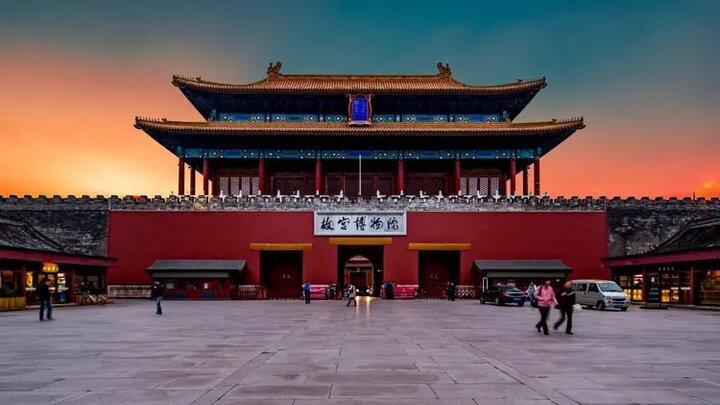
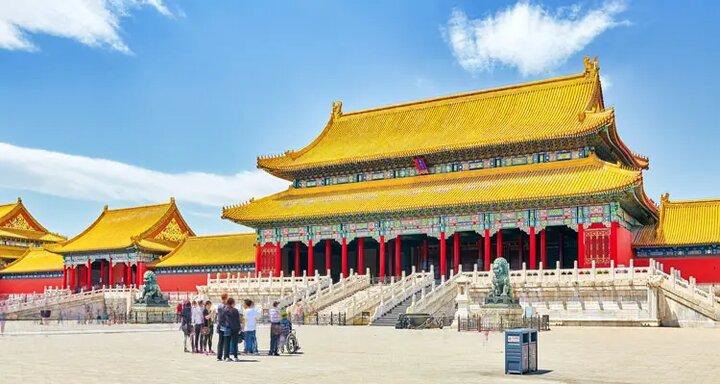
Legend holds that the Golden Dragon’s palace boasted 10,000 rooms, but the emperor humbly built his with 9,999, a nod to the auspicious connotations of “9” in Chinese culture. The Forbidden City’s symmetrical layout, from gates to halls, symbolizes the emperor’s divine authority. Architectural nuances convey imperial power; size, roof style, and statuary all denote importance. Dominated by red and yellow, representing luck and supreme power respectively, the City’s buildings exude significance. Mythical creatures like dragons, phoenixes, and lions adorn its halls, with more animals indicating greater importance. Stone and bronze lions, always in pairs, stand as symbolic guardians at its gates. Housing over a million rare cultural relics, the Palace Museum is a treasure trove of ceramics, paintings, calligraphy, and more, capturing China’s rich history and heritage.
“Citizens” of the Forbidden City
The Forbidden City was the main residence of the Chinese Emperors for 492 years (1420-1912). It was the home of 24 emperors: 14 from the Ming Dynasty (1420-1644) and 10 from the Qing Dynasty (1644-1912). Ordinary people were strictly forbidden to enter.
The first emperor of the Ming Dynasty to live in the Forbidden City was Yongle (Zhu Di) who constructed this city. In 1644, when the emperor was Chongzhen, residence was captured by Li Zicheng’s army, forcing the last emperor of the Ming Dynasty to hang himself on Jinshan Hill.
Then the Qin Dynasty came to power, maintaining the same government structure as the Ming. Prince Dorgon led the new dynasty as the successor of the Ming. Despite the fact
that the Forbidden City became the center of the dynasty, many of its emperors came there only for formal moments. In 1912, China switched to a republican type of government, and the last Emperor Pu Yi was ordered to live within the walls of the Forbidden City.
The plan of the Forbidden City
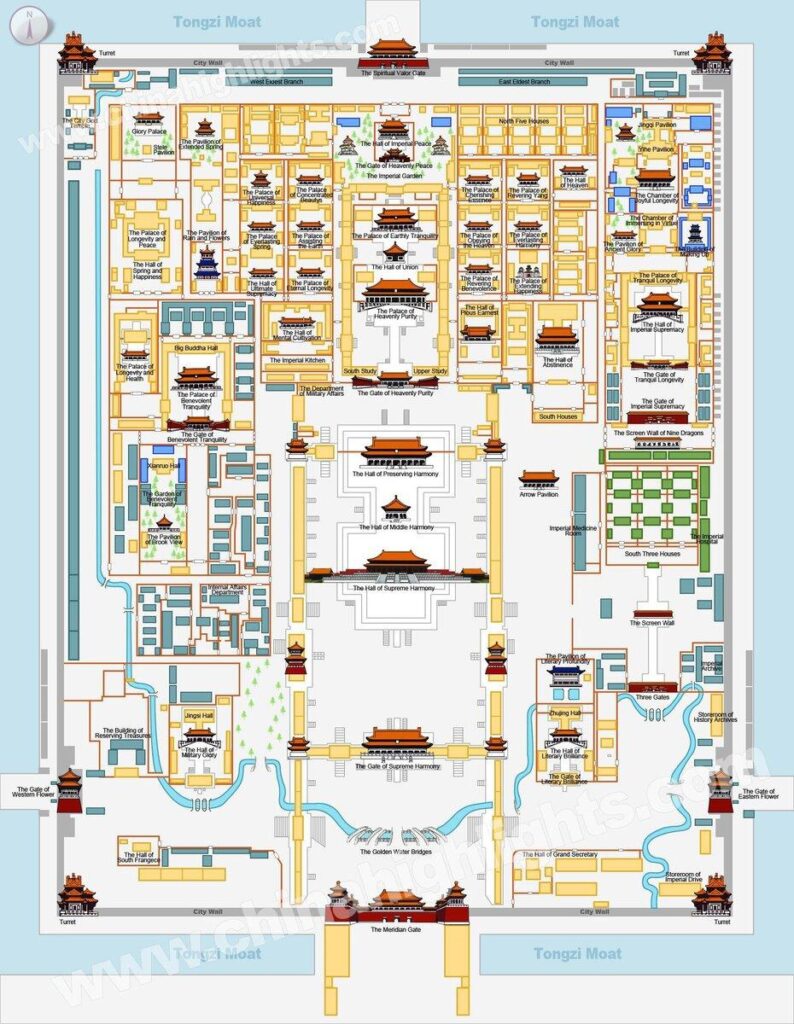
The Forbidden City spans 72 hectares, divided into defensive structures, an outer courtyard, and an inner courtyard. Its main gate features three passageways, with the emperor exclusively using the central one for commands. The Meridian Gate serves as the entrance, safeguarded by a 10-meter wall and a 54-meter moat, with watchtowers at each corner for security.
Wu Gate, the southern entrance, features a guardian lion and leads to a courtyard through which the Golden Water River flows, crossed by five white marble bridges.
Three outer courtyard rooms served ceremonial purposes:
Three outer courtyard rooms served ceremonial purposes:
1. Palace of Heavenly Purity (Qianqingong) – once the emperor’s residence, later an audience hall.
2. Palace of Union and Peace (Jiaotaidian) – housing the imperial seals.
3. Hall of Mental Development (Yangxindian) – where emperors pursued knowledge.
The inner city houses three main halls:
1. Hall of Supreme Harmony (Taihedian) – the largest, housing the Imperial Dragon Throne (Longi).
2. Hall of Central Harmony (Zhonghedian) – for speeches and presentations.
3. Hall of Earthly Tranquility (Kunningong) – once Empress Ming’s residence, later a place of worship during the Qing Dynasty.
Interesting facts
● The Palace Museum in the Forbidden City is one of the largest cultural museums in the world, visited by 14 million people annually.
● Exotic buildings – The Forbidden City has buildings in European and Arabic styles.
● No trees or birds. The emperor thought trees would overshadow the atmosphere of greatness. Also, roofs were specially designed to prevent birds from landing, helping preserve the cleanliness and splendor of the complex.
● The higher status of the palace – more difficult door and window patterns.
● The largest complex of ancient wooden structures in the world. The main frames of all the buildings were built of high-quality wooden beams and columns. Nails were considered too hard, so they were not used in the construction
History
The Forbidden City is now 600 years old. It was built between 1406 and 1420 during the rule of the Yongle Emperor (1403-1425), the third emperor of the Ming Dynasty. He got the throne from his nephew in order to unite power and ensure his own safety. In order to do so, he moved the capital from Nanjing to Beijing and commissioned the construction of the Forbidden City there.
The Forbidden City has survived three fires, so most of the current palaces were rebuilt during the Qing Dynasty. During the Second Opium War (1856–1860), the Forbidden City was occupied by Anglo-French forces until the end of the war in 1860. After the Chinese Revolution (1911-1912), the Forbidden Palace ceased to be the residence of the Qing imperial government. Although some ancient buildings were destroyed during the revolution and war with Japan, this place was generally preserved. At the end of the 20th century, some palace buildings were restored and the Palace Museum was established in 1924.
Protection and management requirements
The Forbidden City, once safeguarded during the Ming and Qing dynasties, transitioned into “Palace Museums” in the 1920s, receiving official restoration and protection in 1961. In 1996, detailed regulations were enacted by the Chinese government, with Beijing establishing a special zone around the palaces in 2005. These measures provide legal, institutional, and managerial support, ensuring the authenticity and integrity of this cultural heritage site are preserved for all to enjoy