NCAA: How college sports in the United States work and why they have become a billion dollar industry
College sports in the United States revolve around an organization called the NCAA, which emerged in the early twentieth century on the initiative of President Theodore Roosevelt. At that time American football was extremely dangerous, there were no unified rules or medical oversight, and students often suffered serious injuries. Universities united into an intercollegiate association that focused on safety and competition regulations and gradually turned into a large structure managing dozens of different sports.
Today the NCAA includes more than a thousand colleges across the country. University teams are divided into three divisions. The wealthiest and strongest compete in the first division, more modest programs play in the second, and in the third division sports are more a part of student life than a path to a professional career. Each university has its own colors, mascot, and legends, which makes teams an important part of the identity of students and alumni.
Thousands of high school students dream of making such teams. Scouts follow them, coaches watch school games and invite the best athletes through sports scholarships. A scholarship can cover tuition and part of living expenses, and academic schedules are adjusted to fit training sessions. For some families this is the only chance to provide a child with higher education. At the same time, formally students do not receive a salary for playing, and their main responsibility remains studying, even if sports take up forty hours a week.
During the season teams compete within their conferences, and then the best advance to national tournaments. The most famous example is March Madness in basketball, a playoff tournament involving dozens of teams where every game is decisive. These tournaments attract huge television audiences, tickets are very expensive, and the atmosphere feels more like a show than an educational event. For many players it is a chance to be noticed by scouts from professional leagues.
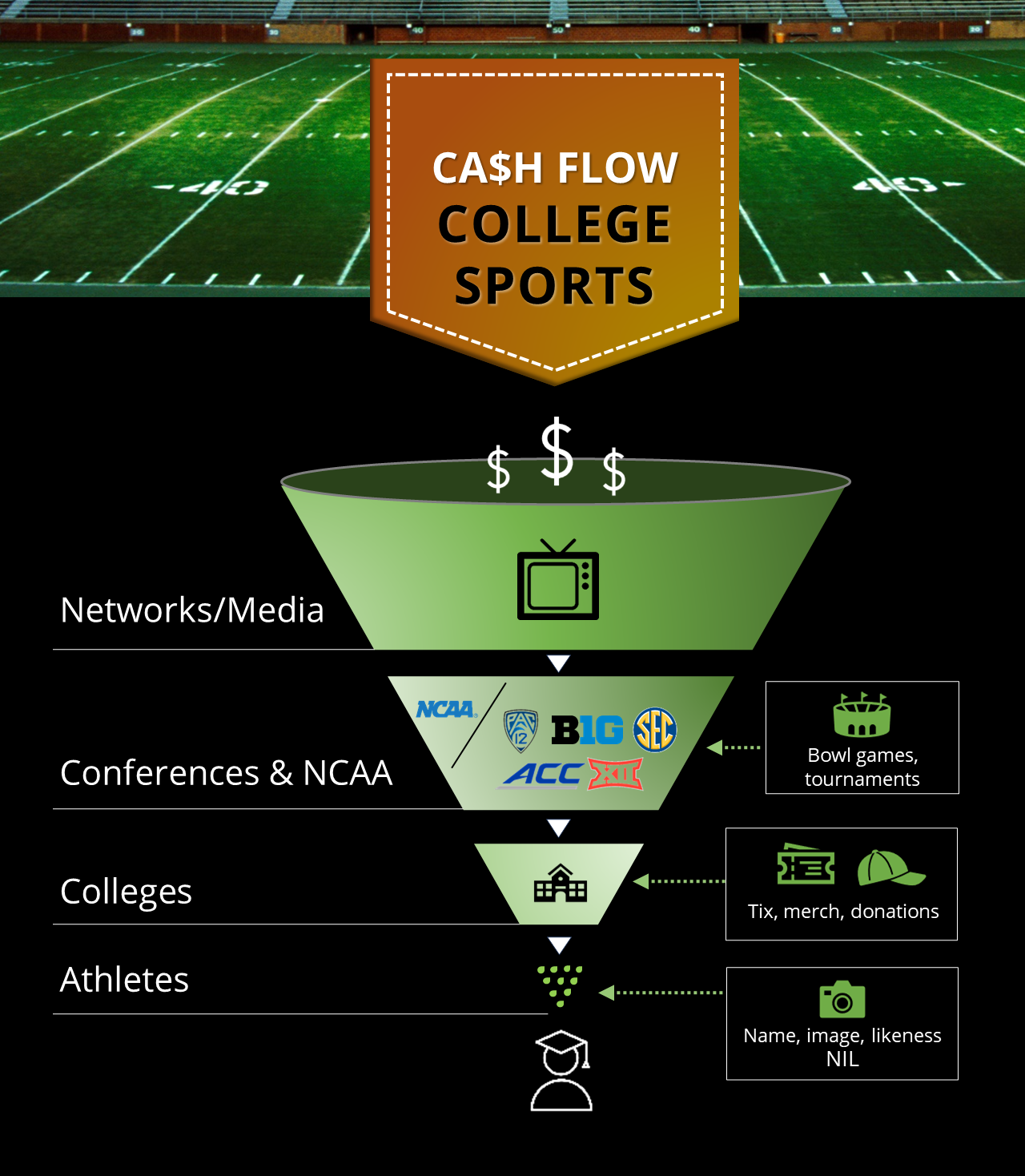
Enormous amounts of money circulate in college sports. The NCAA earns billions from sponsors and television contracts and distributes the funds among universities to maintain sports infrastructure and staff. Individual conferences also sell broadcasting rights, which allows major universities to build stadiums that hold one hundred thousand spectators. At the same time, the athletes themselves were for a long time not allowed to earn money from their popularity.
The situation has changed recently. Students can now sign advertising deals, use their name and image to promote brands, and earn money while maintaining amateur status. The most high profile athletes already make millions thanks to social media and sponsors, even before entering the NBA or NFL. Nevertheless, most remain simply graduates with a degree and experience of competing at a high level, and only a few become true superstars.