The Soviet Assault on Baku and Its Consequences for Azerbaijan
January 20, 1990 became one of the most tragic dates in the history of modern Azerbaijan. On that January night, Soviet troops entered Baku. For the first time, the army of the USSR assaulted a Soviet city in peacetime. The formal justification was the fear of new pogroms, but in reality the operation was aimed at suppressing the growing influence of the Azerbaijan Popular Front and the republic’s desire for an independent political course.
By that moment, mass rallies had been taking place in Baku for several months. They were caused by the Karabakh crisis, the escalation of the national question, and the effective loss of control by the republican leadership. The pogroms against Armenian residents on January thirteenth only deepened the chaos. The central authorities hesitated, did not introduce a state of emergency, and allowed the situation to spiral out of control.
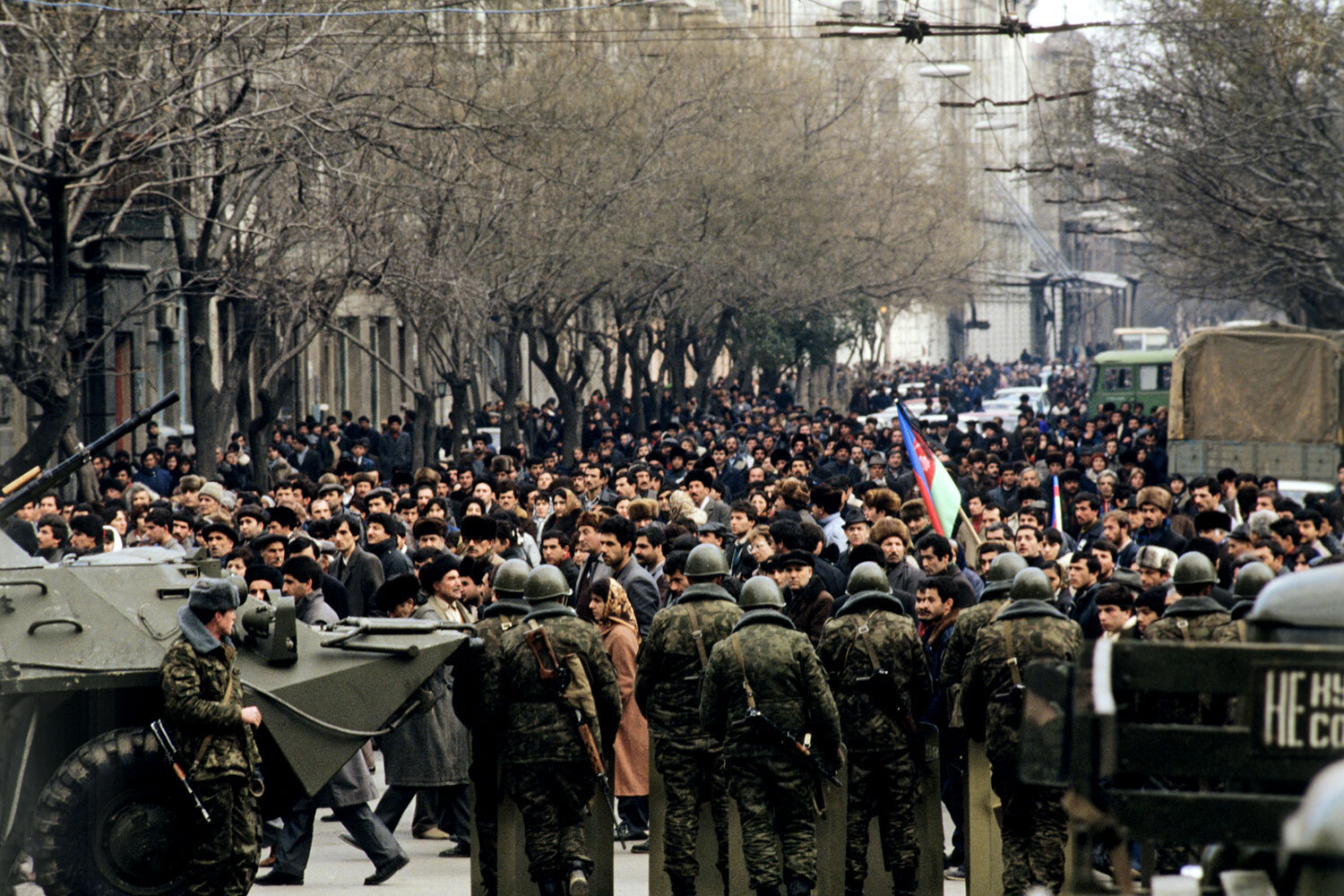
When troops entered the city during the night of January twentieth, residents were still unaware of the curfew. The television center had been disabled, and information simply did not reach the public. Barricades appeared in the streets, and protesters tried to stop military vehicles, hoping to demonstrate their peaceful intentions. However, the advance of the army was accompanied by gunfire, the use of armored vehicles, and special equipment. According to various sources, from one hundred thirty one to one hundred seventy civilians were killed, including women, children, and elderly people.
Eyewitnesses recalled an atmosphere of panic. People squatted down to show that they were unarmed, yet fire was still opened on the crowd. Tanks crushed cars, and smoke grenades and shots turned the avenues into scenes of chaos. Screams and gunfire echoed through the city, and military patrols detained hundreds of people.
In the morning, Baku saw the consequences of the night assault. Military equipment stood in the streets, but thousands of residents came out for the funerals. The procession, which gathered more than one million people, turned into an open act of protest. The victims were buried on a high hill that has since been called the Alley of Martyrs, which became a symbol of national memory.
The events of January became a turning point. They finally destroyed trust in the central authorities and accelerated the processes that led to the collapse of the USSR. For many people in Azerbaijan, it was at that moment that it became clear the republic would not return to its former relationship with Moscow. Soon after, a full scale war over Karabakh began, and the political map of the region changed irreversibly.
Many participants of those days emphasize that they believed they were fighting for freedom. However, decades later, some admit that they never fully understood what this concept truly means in reality and what price must be paid for it.