How Mental Arithmetic Helps Children in Learning and Development
Many parents dream that their child feels confident at school, especially in mathematics. But not all children find formulas, multiplication tables, or problem solving easy. Some need more time, others more practice. One way to help a child understand math and develop intelligence is through mental arithmetic.
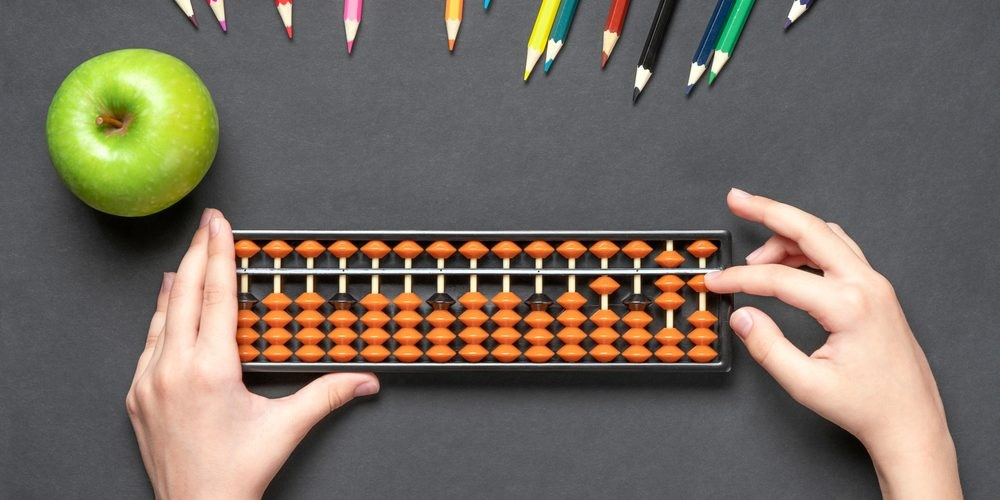
In essence, it is not just fast calculation, but a complete system for developing the brain, based on working with an abacus—ancient counting beads—where a child first learns to move the beads and then to visualize them mentally. Initially, children perform actions on a real soroban, developing fine motor skills, attention, and coordination. Over time, they begin to calculate in their mind, imagining the movement of the beads. This process significantly improves memory, imagination, logic, and thinking speed.
Training can begin as early as four years old, when the brain is especially receptive to new skills. But schoolchildren and teenagers also benefit greatly. Concentration improves, interest in mathematics grows, and self confidence increases. Mental arithmetic is useful for adults as well, as it trains the brain and maintains its flexibility.
The first lessons usually focus on correctly placing the hands on the abacus and performing simple calculations. Later, exercises become more complex, including number visualization, rapid calculation, and logic tasks. Lessons can be group or individual, and are available both offline and online. Personalized formats are often more effective, as the instructor can adjust the pace and exercises to the student’s needs.
The benefits of mental arithmetic are significant. Children begin to calculate faster and more accurately in their minds, memory, attention, and reaction speed improve noticeably. At the same time, visual and logical thinking develop. Seeing their own progress boosts confidence. Academic performance often improves, not only in mathematics but also in languages, reading, and humanities, which require concentration and strong memory.
However, the method does not suit every child in the same way. Some children may become bored if exercises seem repetitive, while others need more time to master the material. It is important to consider individual characteristics and avoid comparisons with others.
Common myths exist, such as the idea that mental arithmetic is only for gifted children or only for the very young. In reality, it is suitable for everyone, regardless of skill level, and benefits all ages.
The method can be learned at home using guides, apps, and video lessons. However, achieving noticeable results requires consistency and regular practice, which is why many parents prefer to work with specialists. For those who wish to deepen their knowledge independently, professional courses in mental arithmetic are available, allowing them to support their child or even work professionally in this field.