
Comet 3I ATLAS
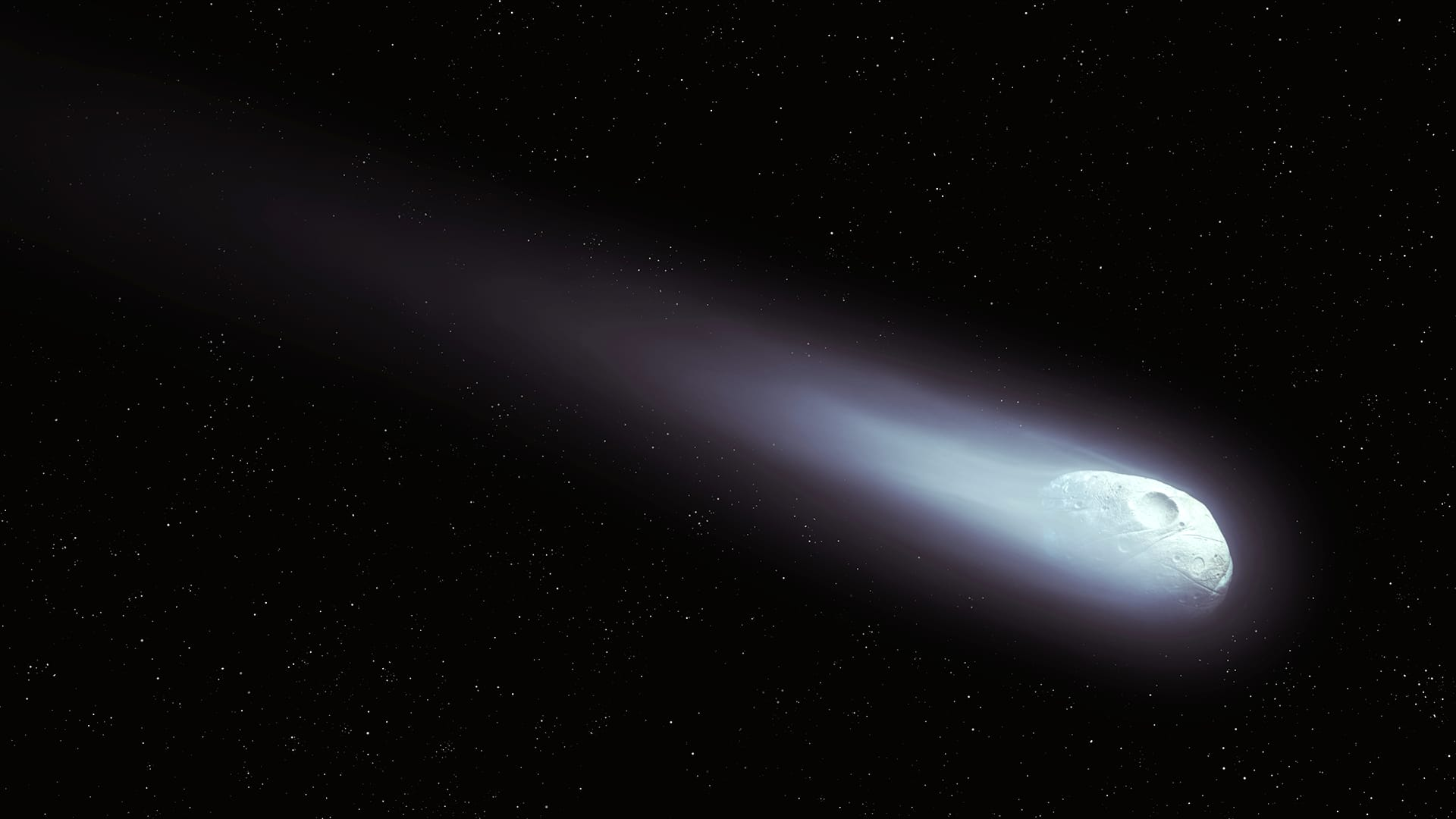
Comet 3I ATLAS would be one of the rarest astronomical events of modern times, as interstellar objects enter the Solar System extremely infrequently. Until recently, scientists had managed to identify only two such bodies arriving from beyond our system: ʻOumuamua in 2017 and Borisov in 2019. Each of them behaved so unusually that they significantly changed our understanding of how planetary systems form in other parts of the Galaxy. The appearance of a third interstellar object would immediately attract the attention of researchers, since such visitors provide information about the chemical composition, dynamics, and history of worlds far beyond the influence of the Sun. The ATLAS system, designed for the early detection of potentially hazardous objects, is one of the most advanced in the world for tracking moving bodies, and its sensitivity makes it possible to detect rare comets whose orbits differ sharply from ordinary ones.
The main reason for the exceptional interest in 3I ATLAS would be its trajectory. Interstellar bodies always move along hyperbolic orbits, with eccentricity values greater than one, which means the object is not bound to the Sun but merely passes through the Solar System and never returns. Such orbits cannot be explained by planetary gravitational influence alone and indicate that the object was ejected from another planetary system, likely during an active phase of planet formation around a young star. This makes each such comet a fragment of a foreign history, delivered to us by random gravitational processes. By observing these objects, scientists gain a unique opportunity to study material that originated in another stellar system and compare it with what is known about comets from our own Oort Cloud.
An important characteristic of interstellar objects is their unpredictable behavior. ʻOumuamua, for example, exhibited a weak but persistent acceleration that was not accompanied by a visible tail or gas emission. This sparked intense scientific debate, since such behavior is not typical of known comets. Some researchers explained the phenomenon by the sublimation of exotic ices, while others suggested an unusual shape of the object that could have functioned like a solar sail. Such precedents compel astronomers to observe future interstellar objects with exceptional care. If 3I ATLAS were to display similar anomalies, it could mark a new stage in understanding the nature of these bodies and the mechanisms governing their motion.
Additional intrigue comes from the possibility of studying the radio spectrum of such objects. The scientific community does not associate interstellar comets with artificial signals, yet each passage provides an opportunity to test this hypothesis in practice. Radio observatories, including the Green Bank Telescope and the Allen Telescope Array, observed ʻOumuamua and Borisov to confirm the absence of unusual radio emissions. These observations are conducted for strictly scientific reasons, as any object interacting with magnetic fields can generate natural plasma emissions, and spectral anomalies can reveal details about the composition of the nucleus and coma. For this reason, the appearance of 3I ATLAS would immediately become the subject of extensive radio observations, not due to speculative expectations, but because of the desire to study its interaction with the solar wind.
Scientific interest is further amplified by the statistical significance of such objects. At present, it is impossible to estimate how often interstellar comets enter the Solar System. Two detected objects represent too small a sample to draw reliable conclusions. A third interstellar visitor would, for the first time, allow scientists to build a more robust model of the distribution of such bodies within the Galaxy. This is crucial for understanding how planetary systems form, what processes eject material into interstellar space, and how often such travelers may pass near the Sun. Taken together, these data help refine our understanding of the history of our own system and the dynamics of galactic processes.