The December Events in Almaty: The Truth About a Suppressed Protest and Its Consequences
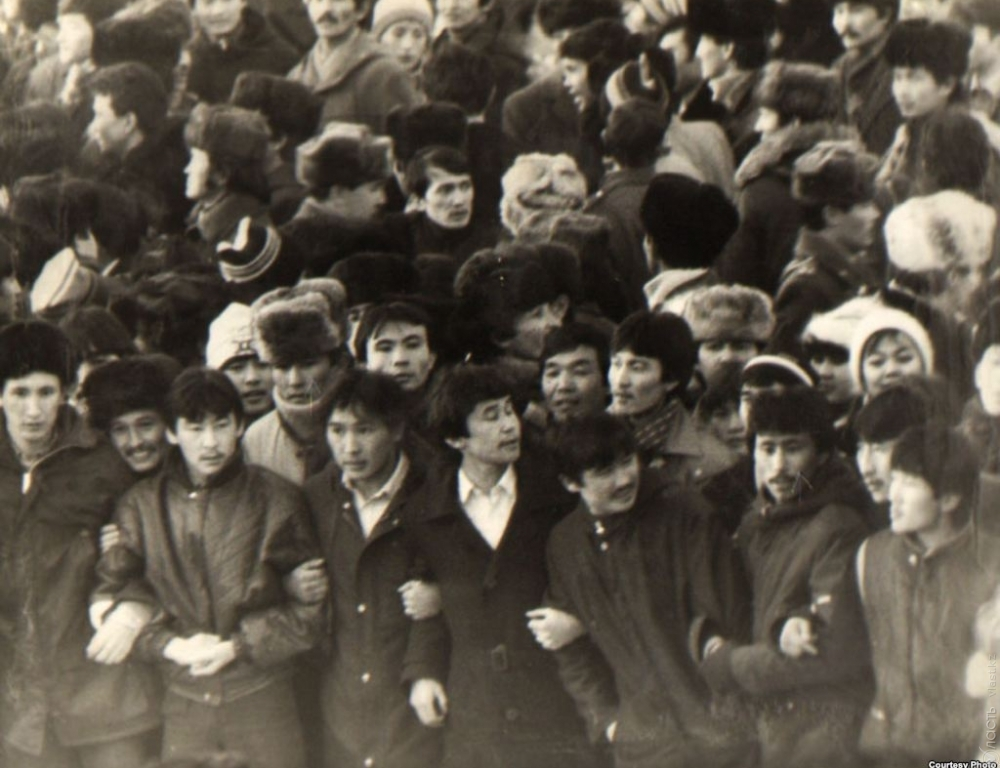
Almost forty years ago, on December 17–18, 1986, thousands of Kazakh students and young workers took to the streets of Almaty. The immediate trigger was the appointment of Gennady Kolbin, a man who had never lived in the republic, as First Secretary of the Communist Party of Kazakhstan. For a country that had endured decades of stagnation, this protest was unprecedented. Zheltoksan in many ways anticipated the wave of rallies and strikes that would soon sweep across the Soviet Union and ultimately contribute to its collapse. For the participants themselves, however, the protest resulted in brutal repression. The exact number of those killed and injured remains disputed to this day. While the official figure acknowledged only two deaths, researchers cite numbers reaching up to 170. One of the figures whose fate became a symbol of the tragedy was Kairat Ryskulbekov, sentenced to twenty years in prison and who died under unclear circumstances while being transferred to a penal colony.
From the very beginning, the official narrative was constructed as a story about a drunken crowd allegedly manipulated by nationalist agitators. A joint statement by the Central Committee of the Communist Party of Kazakhstan, the Presidium of the Supreme Soviet, and the Council of Ministers described the events as hooliganism, riots, and violence against innocent citizens, and called on residents to defend public order. This rhetoric was echoed by top officials. The head of the Kazakh KGB, Zakash Kamalidenov, spoke of hardened nationalists, Salamat Mukashev denied the existence of any victims, and Nursultan Nazarbayev, then Chairman of the Council of Ministers, labeled the protesters as extremist youths and a socially unhealthy segment of the student population. At the same time, directives flowed down through the administrative hierarchy. Universities, factories, and security agencies were instructed to suppress nationalism, hold meetings, mobilize patrol groups, and enforce strict discipline.
The state’s primary response was the use of force. Police, internal troops, and cadets armed with entrenching tools were deployed to the square. According to official data, more than 8,500 people were detained, nearly one thousand received administrative penalties, ninety nine participants were sentenced to prison terms, and over six hundred students were expelled from universities or dismissed from their jobs. Officially, only one demonstrator and one member of a civilian patrol were recognized as having been killed. Only toward the end of the 1980s, after the work of a commission led by Mukhtar Shakhanov and the publication of documents and eyewitness accounts, did a different picture begin to emerge. Around the same time, Nazarbayev’s tone also changed, as he later claimed that he understood the youth’s demands and even suggested that he had been at the head of the column.
Those who were on the square and in its vicinity remembered those days very differently. Eyewitnesses recalled that on the morning of December 17 students arrived with slogans calling for freedom of speech, portraits of Lenin, and demands to explain why the republic should be governed by someone from outside. Many perceived the event as a peaceful demonstration. According to their accounts, violence began only after troops and police started pushing the crowd back, grabbing people, including young women, and throwing them into buses. Batons and entrenching tools were used, followed by fire trucks. In freezing temperatures, people were sprayed with cold water. The resulting ice caused many to fall, suffer injuries, and then be beaten and forced into vehicles. In the evening and at night, security forces combed through courtyards, stairwells, attics, and dormitories, using service dogs and detaining and beating not only protesters but also random passersby.
The events were not confined to the square itself. Student dormitories were stormed by units wearing helmets and carrying shields. Teachers who tried to protect students were themselves beaten and insulted. Residents of nearby buildings later testified that they saw security forces dragging women down staircases, beating people who lay on the ground, and throwing individuals from balconies. The Zheltoksan investigation commission recorded numerous testimonies confirming that the demonstration had remained peaceful until force was used, and that calls for violence came from isolated provocateurs whose actions were inexplicably ignored by law enforcement. Former prosecutors later admitted that the investigations had been conducted with a predetermined accusatory bias under pressure from party leadership, and that judges received informal instructions to impose the harshest possible sentences.
The question of responsibility for the December crackdown has never been fully resolved. Officials from union level agencies shifted blame to local authorities, while Kazakh party leaders pointed to Kolbin and the Kremlin. However, in its final conclusions, the commission noted that even if some decisions were made in Moscow, the republican leadership did not oppose the violence or attempt to protect its citizens. On the contrary, it actively facilitated the implementation of measures imposed from above. For the Soviet system, Zheltoksan became an alarming signal. For the first time, a mass protest in a national republic was driven not by alleged hooliganism, but by demands for political dignity and the right to decide who should govern the country.