1999 movies
1999 is often called the golden year of cinema. That was the moment when Hollywood and the global film industry experienced a creative explosion at the same time. It was a rare year in which major studios, independent directors, and international auteurs all released works that later became classics. Many films from 1999 are now studied in film schools, and their influence is visible across modern genres: from science fiction to psychological drama. Below is an article based on real facts about the most important films of that year.
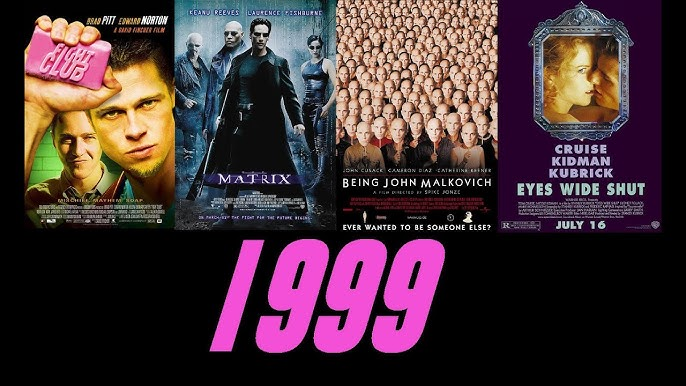
1999 was the year when cinema radically changed the way audiences perceive reality. The clearest example is The Matrix by the Wachowski siblings. The film became a revolution in digital special effects, introducing the world to bullet time—technology that allowed space to “freeze” while the camera moved through it. But even more important was the concept: the world as a simulation, freedom of choice, and rebellion against the system. The Matrix grossed more than $450 million worldwide and instantly transformed the visual language of action and sci-fi films.
That same year, David Fincher’s Fight Club was released. It initially failed at the box office but later became a cult classic. Based on Chuck Palahniuk’s novel, the film tells the story of a man who creates an underground club as a way to fight the inner demons of consumerist society. Its complex narrative structure, nihilist philosophy, visual energy, and one of the most famous plot twists in history made it a classic of the DVD era and a symbol of anti-system cinema.
Another major cultural event was M. Night Shyamalan’s The Sixth Sense, the film that turned its creator into a new master of the thriller genre. With Bruce Willis and young Haley Joel Osment, it created an atmosphere of quiet horror and emotional depth. The film grossed over $670 million and earned six Oscar nominations. Its final twist became a symbol of perfectly constructed dramaturgy and is still considered one of the most powerful in cinema.
1999 was also crucial for the American independent scene. Sam Mendes’s American Beauty became an unexpected triumph. The film explored family crisis, the emptiness of suburban life, and the search for meaning within the chaos of modern culture. It won five Oscars, including Best Picture and Best Director, and its scene with a floating plastic bag became a symbol of the new minimalist aesthetic in cinema.
The culmination of experimental thinking was Spike Jonze’s Being John Malkovich—an absurd, clever, and unexpectedly emotional film in which a door into actor John Malkovich’s mind becomes a metaphor for control over destiny. Critics praised its originality, and it marked the beginning of a new generation of directors who would later shape the style of the 2000s.
Genre cinema also flourished. The Green Mile, based on Stephen King’s work, became one of the most touching films of the year: the story of death-row inmate John Coffey and prison guard Paul Edgecombe captured a massive audience and cemented the film as one of the most emotional in cinematic history. It grossed over $280 million worldwide, and Michael Clarke Duncan received an Oscar nomination.
In international cinema, Fear and Trembling stood out, but the main global phenomenon was the South Korean film Nowhere to Hide, later regarded as one of the sparks that ignited the rise of Korean filmmaking. Animation was also undergoing transformation: Disney’s Tarzan and Japan’s Princess Mononoke continued to push the industry forward, laying the foundation for future revolutions in animation.