Synchronized Swimming
Synchronized swimming, now officially known as artistic swimming, is an aquatic sport that combines elements of dance, gymnastics, and swimming. It emerged in the early 20th century, when water shows featuring performers began to evolve into athletic performances with clear rules and scoring. Over time, the discipline became part of international competitions and was included in the Olympic Games, cementing its status as one of the most technically challenging and aesthetically expressive sports.
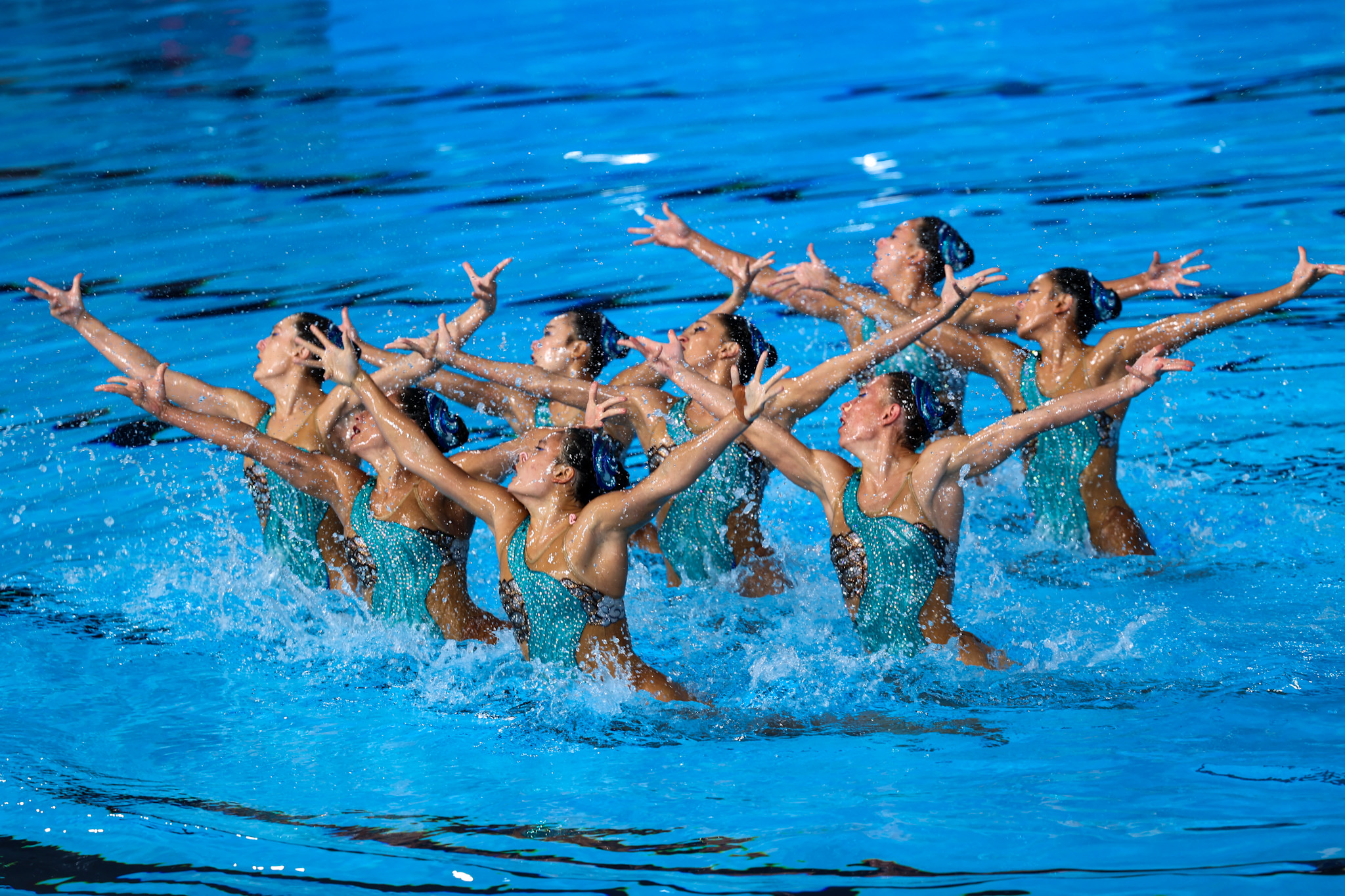
The foundation of synchronized swimming is the execution of complex figures and sequences to music. Athletes work synchronously in the water, performing elements that require high flexibility, coordination, breathing control, and strength. Most of the movements are performed underwater, so synchronization depends not only on the musical rhythm but also on precise timing and body positioning. Holding poses, lifting partners, and spinning require powerful leg and core work, making the athletes’ training similar to that of gymnasts and acrobats.
A distinctive feature of this discipline is the lack of support in the water. All movements, including vertical lifts, “pillars,” and “scissors,” are performed using the “scissor” or “windmill” kicking technique. Athletes train their breathing to remain underwater for more than half of their routine, sometimes holding their breath for 40-50 seconds at a time. This requires developed endurance and the ability to maintain concentration under intense physical strain.
Competition routines are divided into technical and free routines. In the technical routine, athletes are required to perform a specific set of elements in a prescribed sequence. Free routines allow more freedom in choosing the composition, emphasis, and artistic expression. Judging is based on technique, synchronicity, difficulty of the elements, musicality, and artistry of the performance.
Synchronized swimming remained an exclusively female sport for many years, but in recent years, men have begun actively participating in mixed duets. In 2024, the decision was made to allow men to compete in team competitions at the Olympic Games, marking a historic step in the development of the discipline.
Traditionally, Russia, Japan, China, Spain, and Ukraine stand out among the leading countries. These teams demonstrate a high level of technique and introduce new choreographic solutions to their programs. Their training includes dryland work, choreography, acrobatics, and multiple repetitions in the pool, as even the slightest error can disrupt the entire team’s synchronicity.